


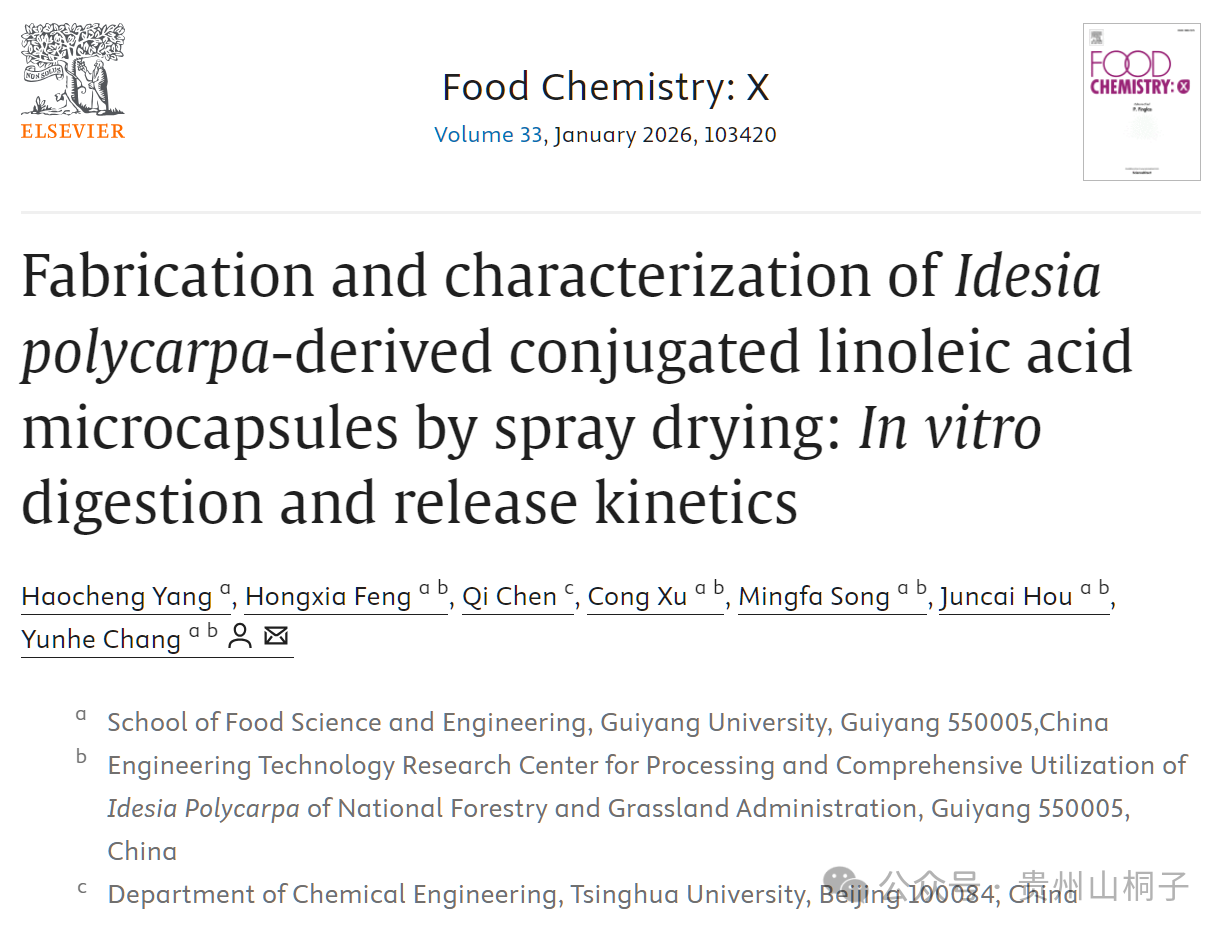
贵阳学院食品科学与工程学院、山桐子国家林业和草原局重点实验室常云鹤博士在Food Chemistry: X上发表了题为“Fabrication and characterization of Idesia polycarpa-derived conjugated linoleic acid microcapsules by spray drying: In vitro digestion and release kinetics”的研究论文。贵阳学院食品科学与工程学院、山桐子国家林业和草原局重点实验室杨昊澄为第一作者,常云鹤博士为通讯作者。
山桐子油因其高比例的不饱和脂肪酸(主要是亚油酸,以及油酸、棕榈油酸和亚麻酸),而被认为是一种具有工业潜力的新型植物油。此外,它还含有生物活性化合物,包括生育酚(α, β, γ, δ异构体)、β-谷甾醇和多酚。值得注意的是,亚油酸是山桐子油中的主要脂肪酸,在不同地理区域,无论果实大小,其含量始终超过60%,表明其成分特征稳定。
亚油酸是一种人体无法合成的必需 omega-6 脂肪酸,广泛存在于食用植物油中。共轭亚油酸(CLA)是一类多不饱和脂肪酸。已有研究报道共轭亚油酸具有脂质调节和抗炎作用,然而,CLA 的实际应用因其较低的化学和热稳定性而受到限制。此外,与其他长链脂肪酸一样,CLA 主要在小肠中被消化和吸收,而在上消化道暴露于低 pH 和氧化条件下可能导致其异构化或氧化,降低其功能完整性。
微胶囊化是一种提高 CLA 化学稳定性并延缓其氧化变质的策略技术,该过程涉及将生物活性化合物封装在保护性基质中,以在加工和储存期间将其与环境压力因素(如氧气、光)隔离。微胶囊化提供了一道物理屏障,既能保护生物活性物质,又能实现其靶向释放。除了提高稳定性之外,这种方法还能实现更可预测的释放曲线,并有助于提高食品体系中的生物利用度。喷雾干燥是食品相关微胶囊化最广泛使用的技术,因其具有可扩展性、成本效益高以及适合工业应用的特点。
因此,本研究通过从山桐子油生产 CLA,用大豆分离蛋白/麦芽糊精对其进行微胶囊化制备山桐子共轭亚油酸微胶囊(IP-CLA-ME),并系统评估其物理化学性质、稳定性、消化行为和释放动力学。这些发现为植物源 CLA 的稳定化和递送提供了见解,突显了其在功能性食品和营养保健品应用中的潜力。
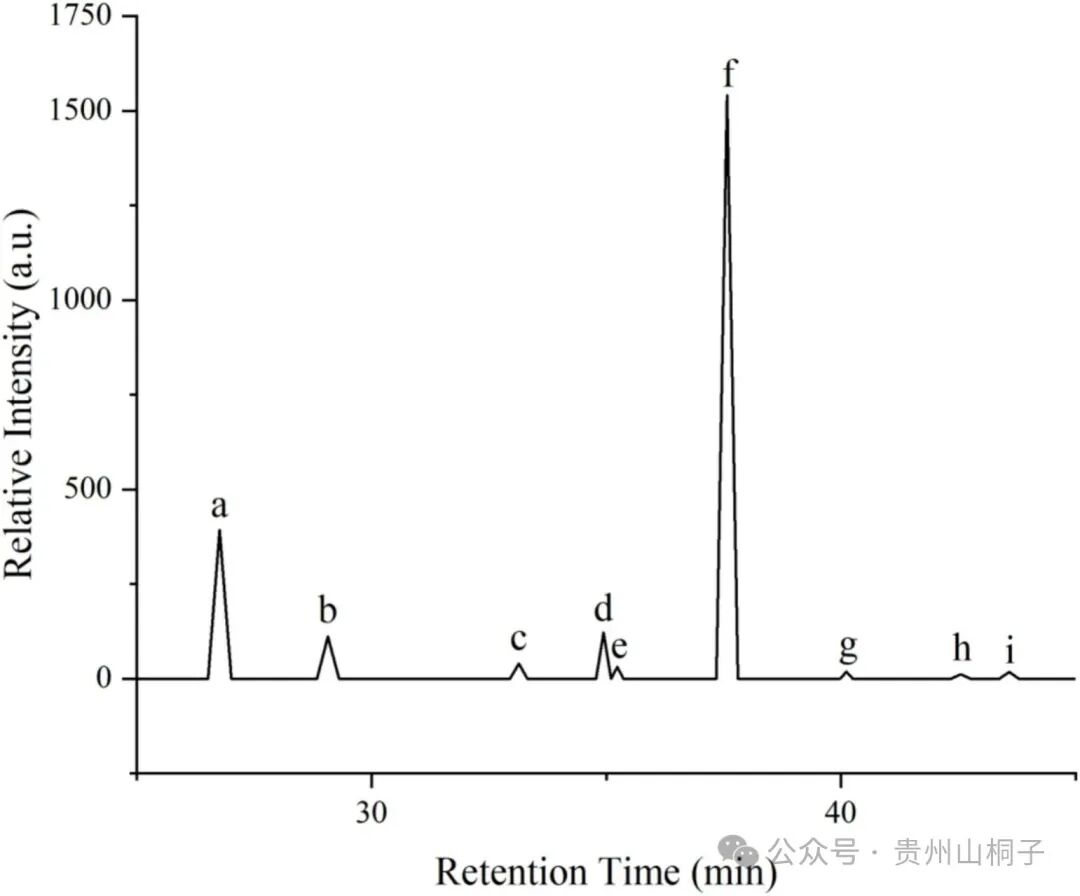
Figure GC chromatogram of fatty acid methyl esters from I. polycarpaoil. The major peaks were identified as follows: a, palmitic acid (C16:0); b, palmitoleic acid (C16:1); c, stearic acid (C18:0); d, oleic acid (C18:1); e, minor fatty acid 1 (MFA1); f, linoleic acid (C18:2); g, linolenic acid (C18:3); h–i, minor fatty acids 8 and 9 (MFA8–9).
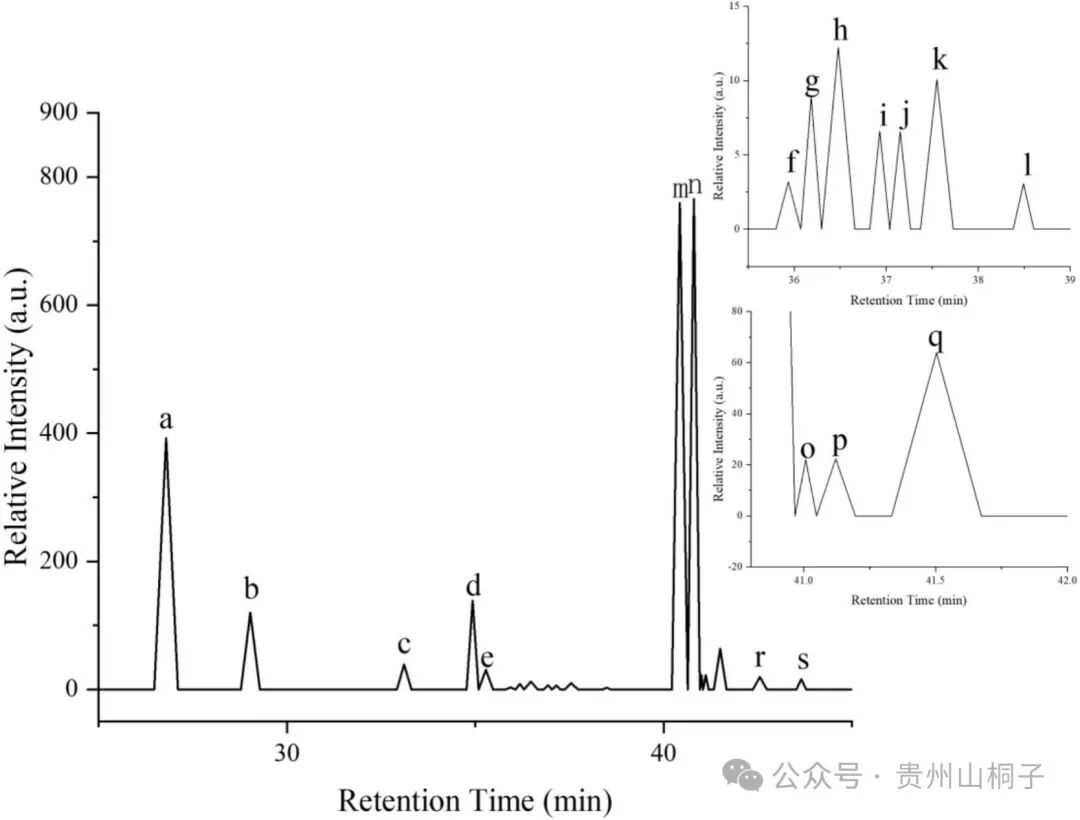
Figure GC chromatogram of fatty acid methyl esters from IP-CLA.The major peaks were identified as follows: a, palmitic acid (C16:0); b, palmitoleic acid (C16:1); c, stearic acid (C18:0); d, oleic acid (C18:1); e–j, minor fatty acids 1 to 6 (MFA1–MFA6); k, linoleic acid C18:2);l, minor fatty acid 7 (MFA7); m,cis-9,trans-11 CLA; n,trans-10,cis-12 CLA; o, linolenic acid (C18:3); p,cis-9,cis-11 CLA;cis-10,cis-12 CLA; q,trans-9,trans-11 CLA; trans-10,trans-12 CLA; r–s, minor fatty acids 8 and 9 (MFA8–MFA9)
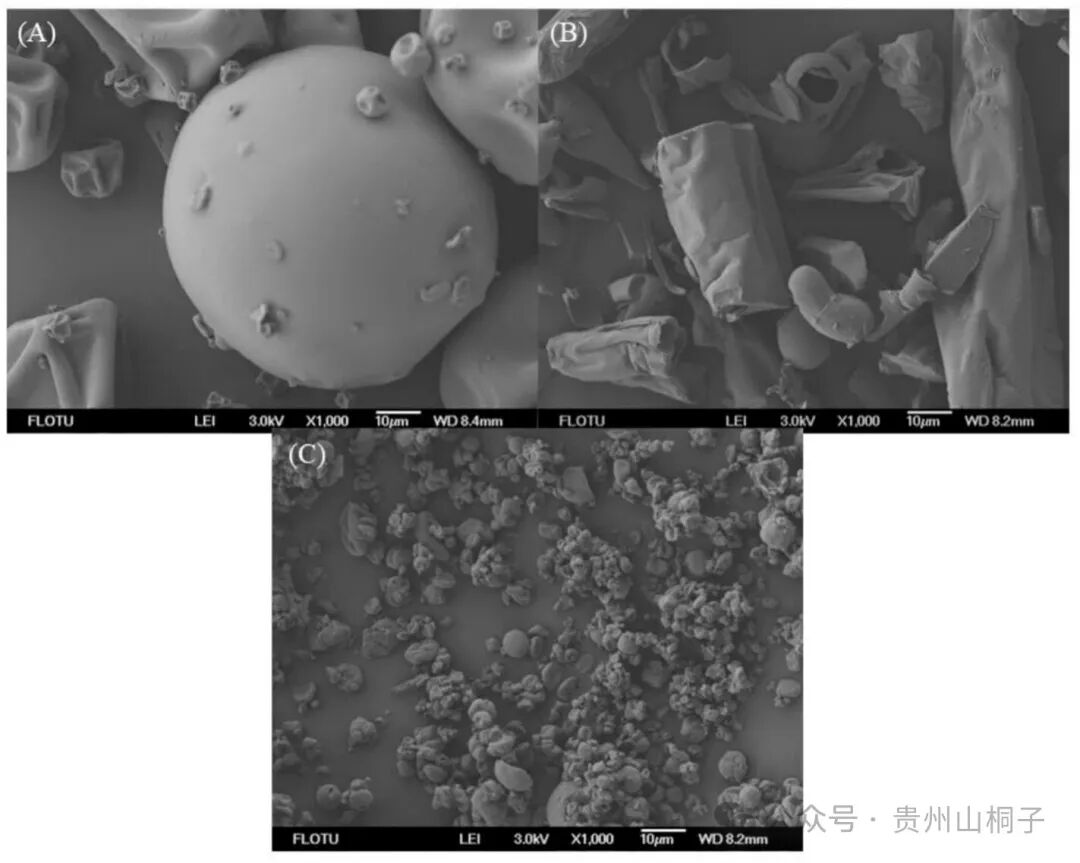
Figure SEM images of (A) SPI, (B) MD, (C) IP-CLA-ME. Representative images from triplicate samples
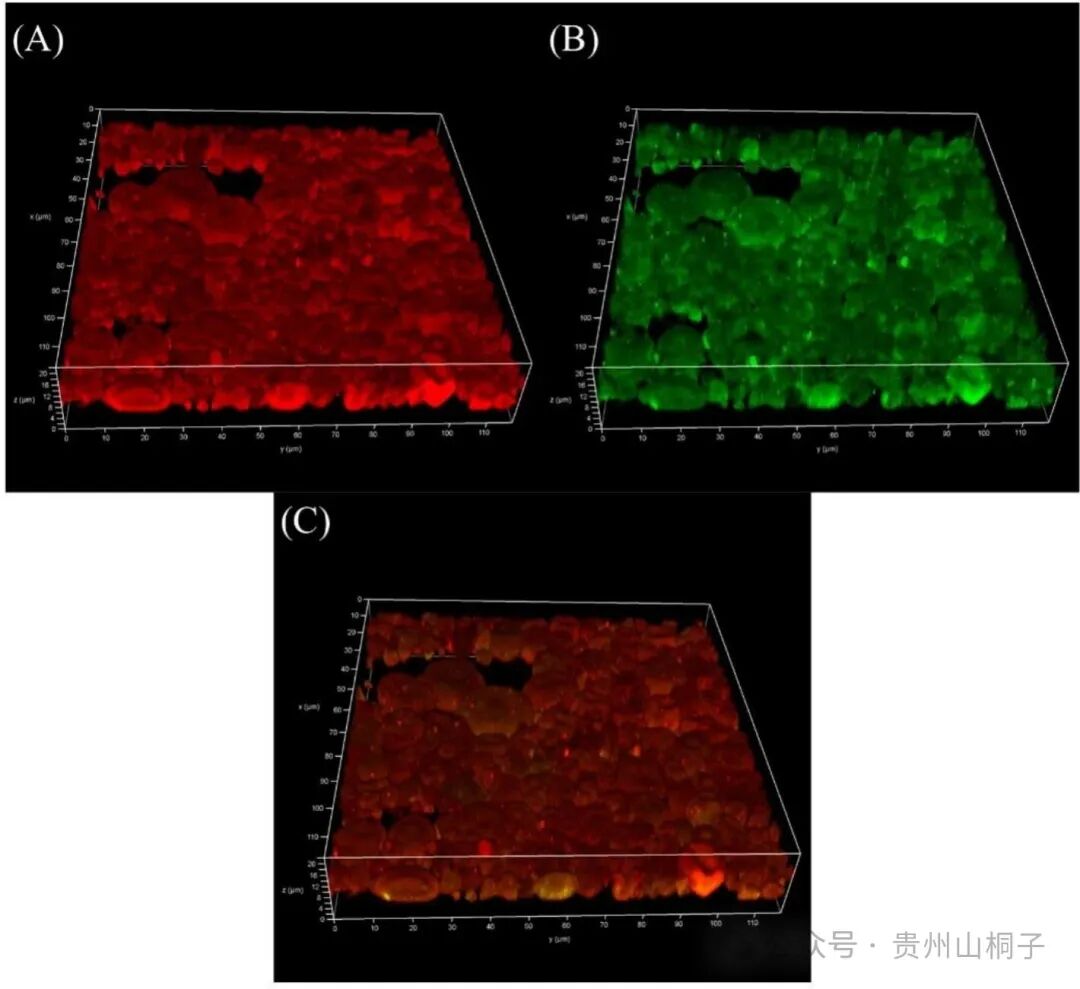
Figure CLSM images of IP-CLA-ME with dual fluorescent staining. (A) Nile red stained oil phase (IP-CLA) in red; (B) Nile blue stained protein phase (SPI) in green; (C) merged image showing overlapping regions in orange. (For interpretation of the references to colour in this figure legend, the reader is referred to the web version of this article.)
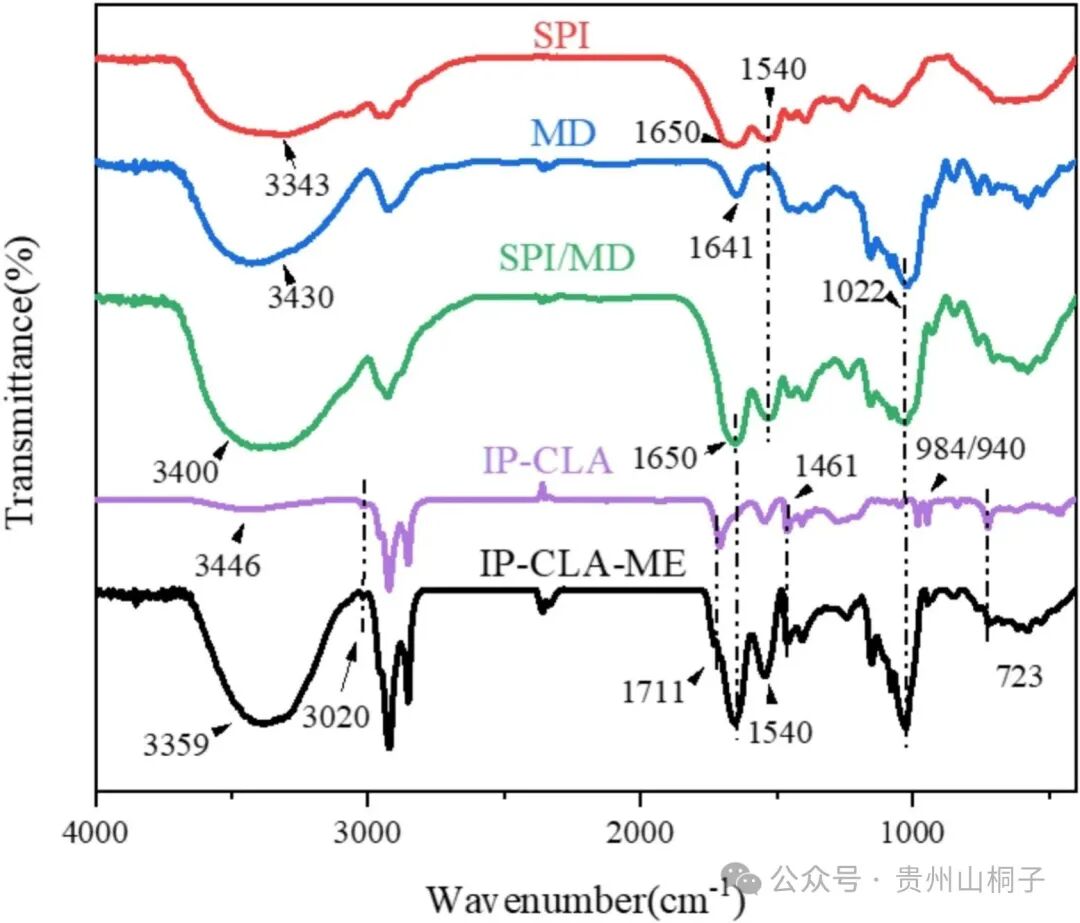
Figure FTIR spectra of SPI, MD, SPI/MD, IP-CLA, and IP-CLA-ME.
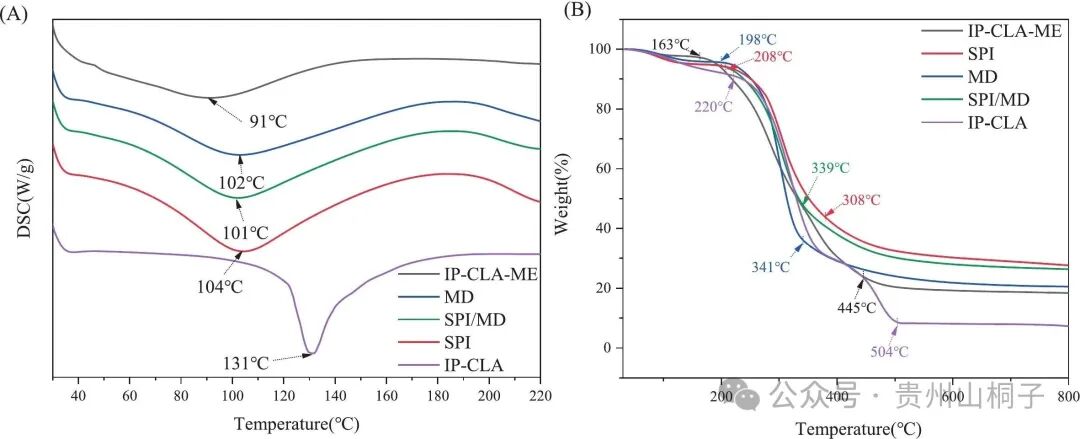
Figure Differential scanning calorimetry (A) and thermogravimetric spectra (B) of IP-CLA, IP-CLA-ME, SPI, MD, and SPI/MD. Representative curves based on triplicate measurements.
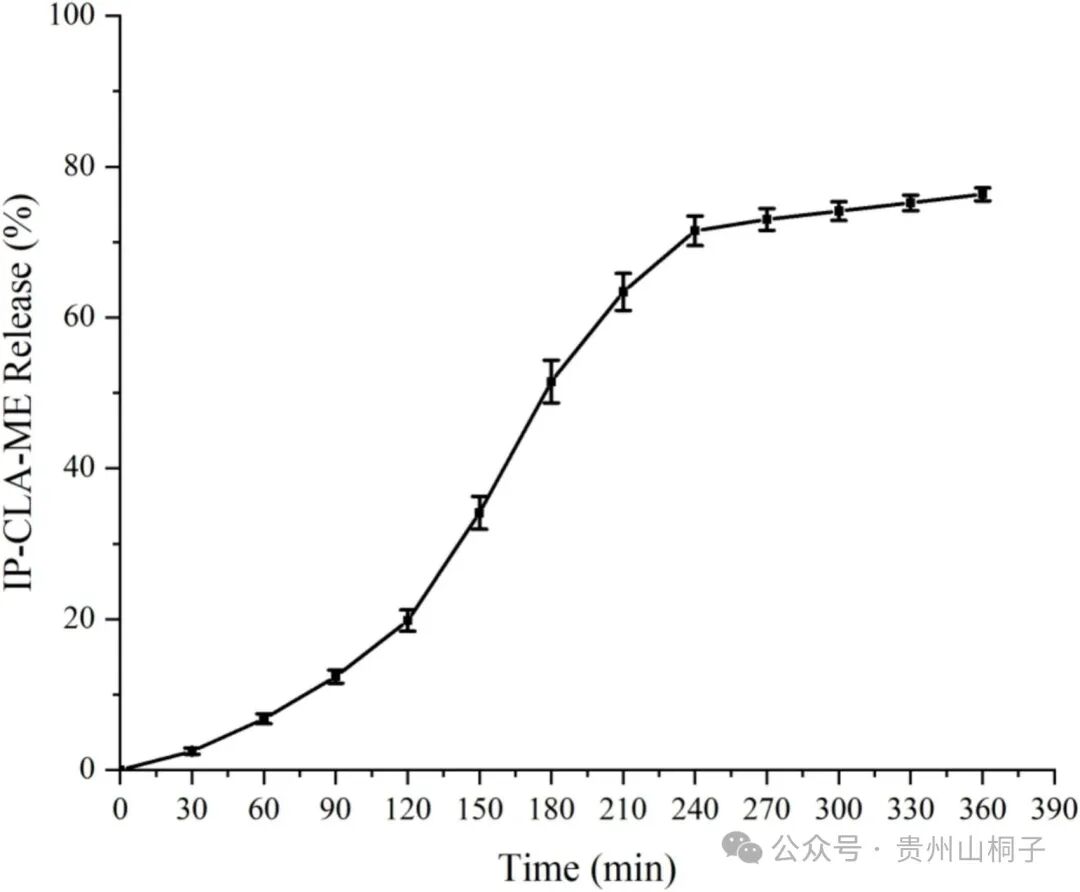
FigureIn vitrooil release profile of IP-CLA-ME during simulated gastrointestinal digestion. Error bars represent SD (n = 3).
结论与展望
在这项研究中,使用大豆分离蛋白/麦芽糊精作为复合壁材,通过喷雾干燥法制备了 IP-CLA-ME。IP-CLA-ME 表现出高包封率和结构均匀性,同时具有良好的热稳定性和氧化稳定性。体外消化实验显示其在胃液环境中释放量极低,而在肠道环境中释放加快。动力学模型表明,其释放过程最符合零级模型,意味着释放过程持续且不受浓度影响。由于未对 IP-CLA-ME 与未包封的 IP-CLA 进行直接的体外消化对比,因此微胶囊化对肠道递送的潜在优势仍有待未来进一步研究加以确认。这些发现表明,大豆分离蛋白/麦芽糊精微胶囊化技术在提高植物来源共轭亚油酸的稳定性及实现可控释放方面具有潜力,未来有望应用于功能性食品体系。
文章来源:公众号贵州山桐子